Entrepreneurship is a journey made of bold dreams and practical realities. The key is not choosing one over the other, but knowing when to use each.
This idea can be summed up in one phrase every entrepreneur should remember:
“Think big when you start. Think small when you execute.”
Kimara’s Story: A Passion That Inspires Me

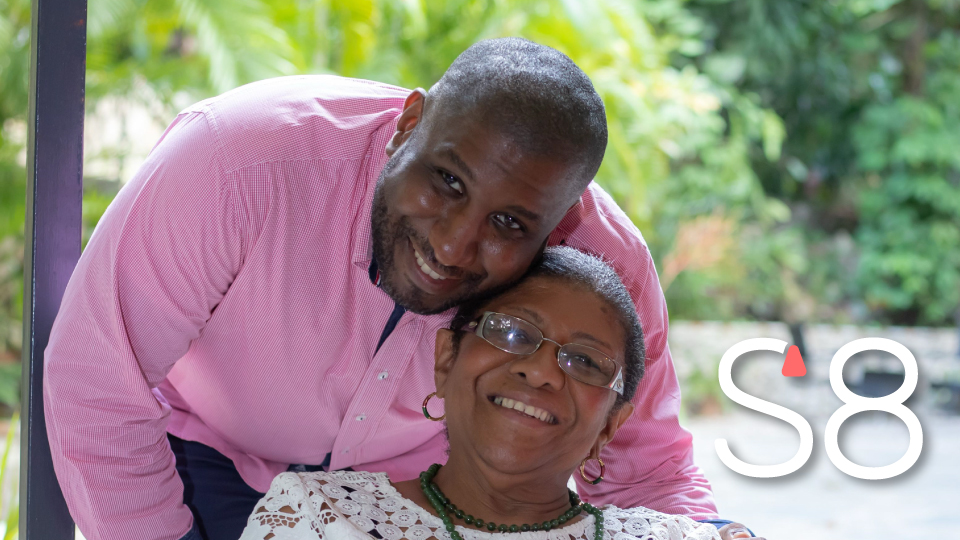
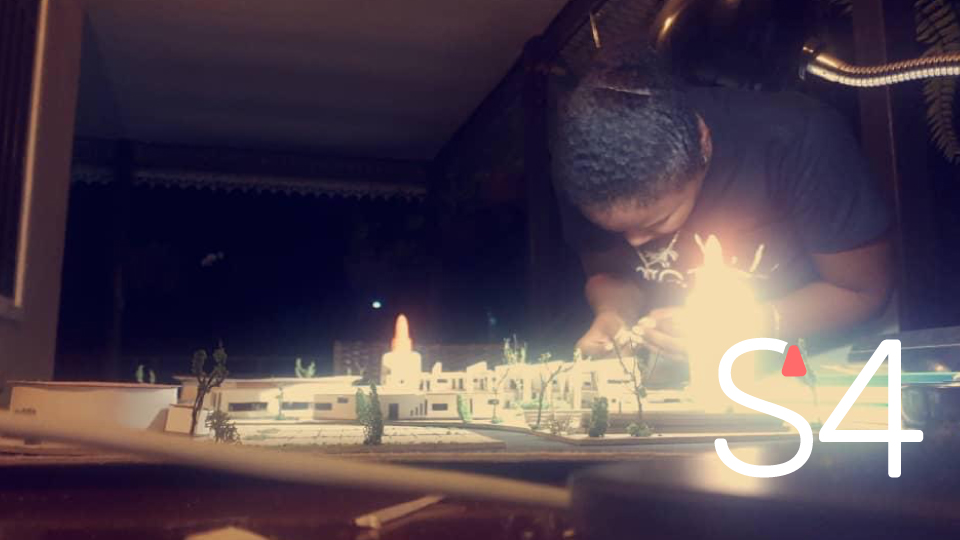
My daughter Kimara Malebranche loves architecture. She studies shapes, structures, and spaces, and dreams of creating places that are both beautiful and useful. Right now, she’s not thinking about becoming an entrepreneur. She is still in a stage of learning, exploring, and getting inspired.
But when I talk with her and see how excited she gets about certain buildings or urban projects, I can’t help imagining what she might achieve if one day she chose the entrepreneurial path.

I believe she could do great things if she found this balance: dream big to imagine, think small to make it happen.
This reflection comes from what I’ve also seen in many entrepreneurs: too much dreaming without action leads to failure, and too much action without vision leads to burnout.
Thinking Big: The Dreaming Side
Thinking big doesn’t mean being naive. It means staying open to new possibilities and daring to imagine bold solutions.
It helps entrepreneurs to:
- imagine freely without limits,
- explore many directions without holding back,
- grow their network beyond their usual circle,
- let their imagination flow, even with ideas that seem unrealistic.
That’s the dreaming side.
If Kimara applied this to architecture, she could imagine sustainable cities, buildings that create their own energy, or homes where nature blends into every space. Her final project at ESDAC Design School in Montpellier, called “Back to the Future,” shows this vision well. She explored how raw earth could be both an ancient building material and a modern, future-proof solution. Some of these ideas may not be realistic today, but daring to think big opens the way for tomorrow’s solutions.

The IDEA Framework: From Intuition to Creativity
To support this stage, I created a simple framework called IDEA. Because behind every achievement, there is an idea.
- I – Inspire: Get inspired by others; every idea sparks another.
- D – Diverge: Generate as many ideas as possible without judgment.
- E – Explore: Dare to test crazy and unexpected ideas.
- A – Adjust: Select and refine the best ones.
In the “think big” stage, focus on I, D, and E: inspire, diverge, explore. Adjusting comes later.
Thinking Small: The Doing Side
Once the dream is clear, it’s time for action. Here, the mindset changes.
The entrepreneur becomes a planner, turning the big vision into small, doable steps with current resources.
Thinking small means:
- Breaking the vision into small wins.
- Working with what’s already available.
- Setting short-term goals: clear deadlines, budgets, and results.
- Reviewing and adjusting along the way.
The “A” in IDEA: Adjust Through Action
This is where “A – Adjust” comes in. After many ideas, it’s time to select, refine, and plan. We focus on what’s possible, turn concepts into projects, and create a clear path.
For example, an architect might dream of a skyscraper fully powered by renewable energy. But thinking small could start with a pilot project: one house with solar panels and a rainwater system. Every step becomes progress toward the bigger dream.
Balancing Dreams and Action
Success doesn’t come from vision alone or execution alone. It comes from balancing both:
- Dream big so ambition has no limit.
- Act small so the dream becomes reality step by step.
Dreams fuel motivation. Actions build reality.
This is what I hope Kimara will understand if she chooses entrepreneurship one day.
A Father’s Lesson for Entrepreneurs
Kimara may never become an entrepreneur. But in her passion for architecture, I already see her ability to dream big.
For her, as for any entrepreneur, the key is finding balance between dreaming and doing.
Because entrepreneurship, like architecture, is the art of building. You first dream the shape of the structure, then place each stone one by one to make it real.
Dreams light the path, but small steps build the journey.